For almost six decades, the Kennedy Center has been the center of D.C.’s cultural life, looming over the Potomac with its marble halls and ornate chandeliers. But, President Trump’s recent takeover of the institution has left many questioning if the historic institution will be able to survive.
The Beginnings of the Kennedy Center
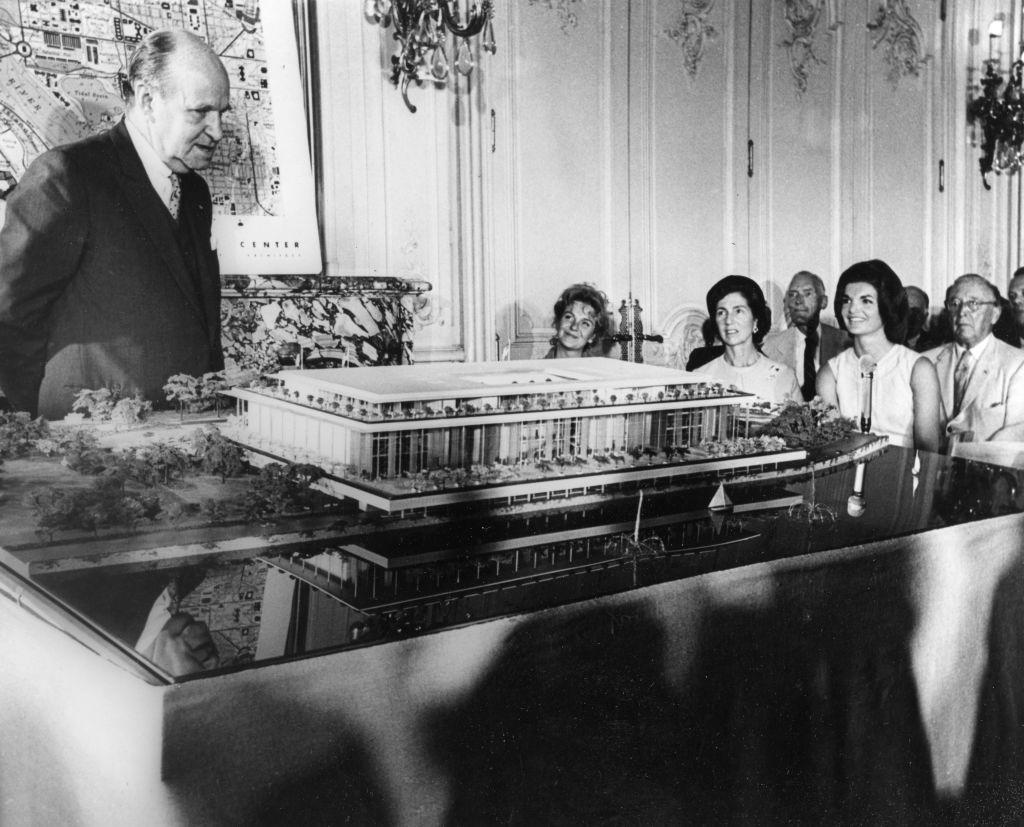
The Kennedy Center — originally called the National Cultural Center — was established through bipartisan legislation by President Eisenhower in 1958, but didn’t open its doors until 1971. Eisenhower may have signed it into law, but it was President and Mrs. Kennedy that raised the $70 million dollars to bring the center to life.

Construction of the Kennedy Center in the late 1960s. (Photo courtesy of the Kennedy Center)
During the ground breaking, President Lyndon Johnson hailed the center as “a living force for the encouragement of art,” that aimed to inspire creativity in young people, serve as a model for other cultural centers, and bring the arts to everyone.
The center opened with a world premiere of a Requiem mass honoring President Kennedy by conductor Leonard Bernstein. Ever since, it has been host to performances ranging from local comedy shows to Beyoncé to the first U.S. performance of the Bolshoi Ballet.

Kennedy Center 1971 gala. (Photo courtesy of the Kennedy Center)
The Kennedy Center Today
Fast forward to 2025 and President Trump has taken over as chair of the Kennedy Center Board, filled the institution’s leadership with supporters, and promised to end any “woke” programming.
This shift in focus has led to a mass exodus of performers and employees. Actress Issa Rae canceled her performance. Shonda Rhimes, Ben Folds, and other celebrities have left posts at the institution. Artistic director Renee Fleming left. And several LGBT+ performances have been canceled, including the Gay Men's Chorus performance with the National Symphony Orchestra.
The Future of the Kennedy Center Remains Uncertain
The primary job of the chairman is to fundraise and donate money — the previous chairman David Rubenstein gave over $100 million in personal wealth. However, reporter Philip Kennicottit from the Washington Post says it seems unlikely that Trump will follow this example, nor does he have a strong reputation for successfully running non-profits.
This leaves one overwhelming question, which we sought to answer in a recent City Cast DC podcast: