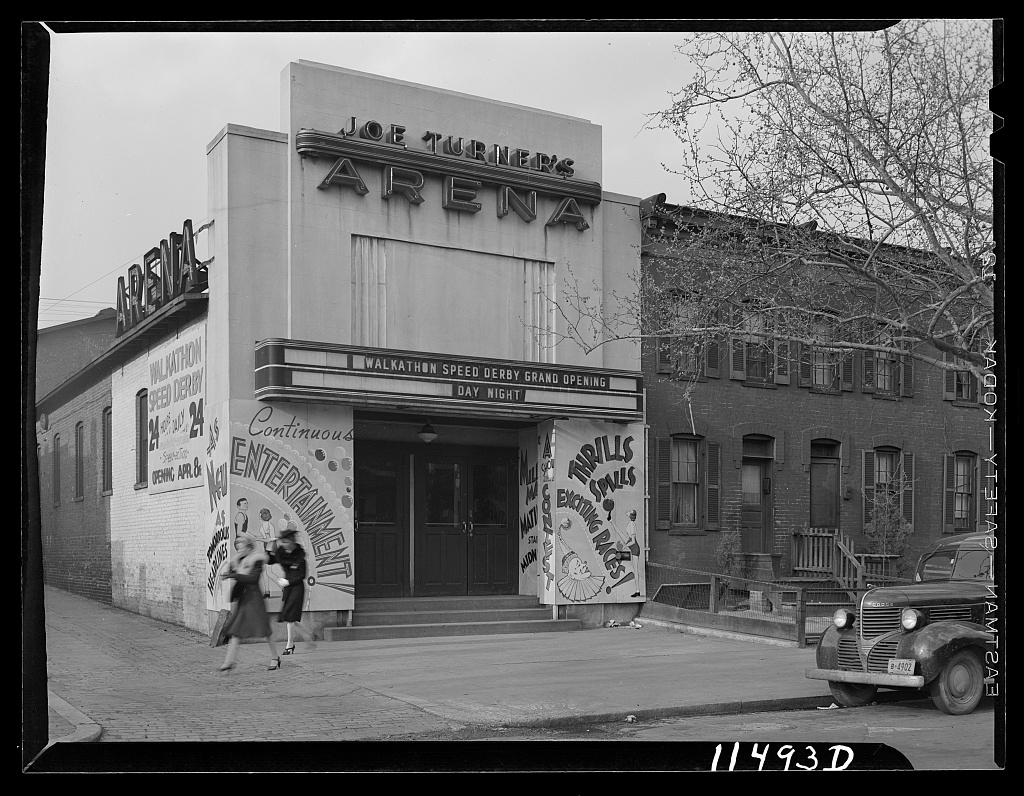

It’s Lunar New Year! In D.C. that means parades, lion dancing, and most importantly, lots of food. Unfortunately, D.C.’s Chinatown is a bit lackluster in terms of traditional Chinese cuisine (you’ll have to head to Rockville for that), but that wasn’t always the case.
Restaurants were some of the first Chinese immigrant-owned businesses in D.C. during the early 20th century, and their legacy continues to shape D.C.’s food scene.
Early Days of DC's Chinese Restaurants
In the 1850s, as Chinese immigrants traveled east from California, many landed in D.C. They made homes on Pennsylvania Ave. NW, the city’s original Chinatown, and opened several restaurants.
However, negative press and racist assumptions gave the neighborhood a reckless, lawless reputation, and its restaurants were seen as “exotic places of mystery,” more akin to a circus than a restaurant. Hong Far Low Restaurant was one of the first, which the Washington Post said was filled with “strange, guttural conversation” and would “beguile the senses.”
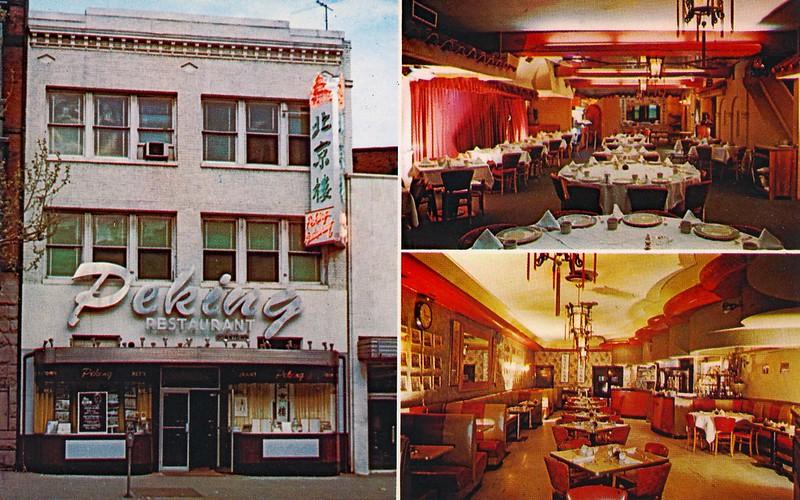
Peking Restaurant, Washington D.C. (Streets of Washington/Flickr)
Catering To a New Palate
The invention of several Chinese-American dishes, especially chop-suey, increased the cuisine's popularity. But it wasn’t until after World War II that Chinese restaurants really took off in D.C. Better trade meant readily available foreign ingredients and the Chinese Exclusion Repeal Act meant Chinese people could immigrate more freely.
With Good Food Comes DC's Elite
As in the rest of the country during this time, D.C.’s Chinese cuisine primarily came from the southeast regions of China. Think chow fun and BBQ pork. In 1947, The Peking was the first northern Chinese restaurant, in both D.C. and the entire U.S., introducing now popular dishes like moo shu pork and Peking duck.
Another popular restaurant at the time was Yenching Palace, which allegedly entertained more diplomats than the White House. The restaurant is also where ABC News reporter John A. Scali (friends with the Kennedys) reportedly met with Soviet officer Aleksandr Feklisov to negotiate the end of the Cuban Missile Crisis, bypassing official diplomatic channels.
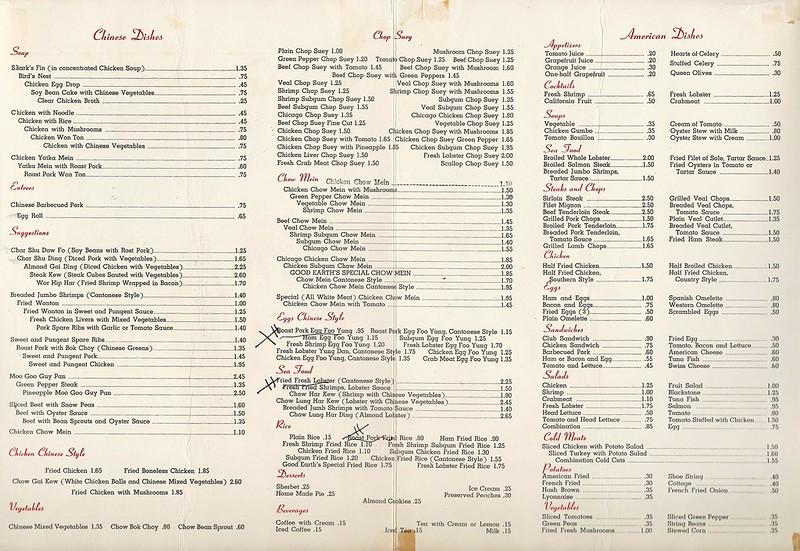
Good Earth restaurant menu, 1947. (Streets of Washington/Flickr)
Restaurants also often had separate American food and Chinese food menus, or offered authentic Chinese cuisine “off the menu.” Menus would also often include instructions about how to order food family-style, how to order a well-rounded meal, and how to use chopsticks.
Pushed To the Suburbs
Sadly, most of these restaurants are gone, pushed out to ethnic enclaves in the suburbs along with much of D.C.’s Chinese population in the ‘70s and ‘80s. Of course, you’ll still see Chinese signs above Five Guys and Walgreens, but it can’t help but feel like a themed movie set, rather than these grand Chinese restaurants of the past.