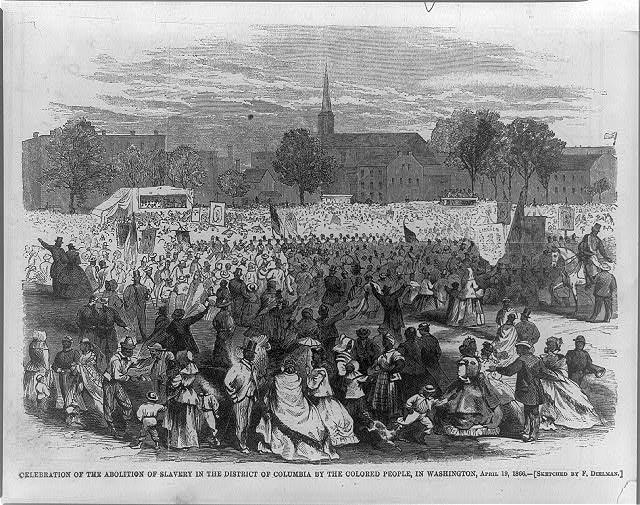
On April 16, 1862, President Abraham Lincoln signed the District of Columbia Compensated Emancipation Act, freeing over 3,000 enslaved people in D.C. After, residents started celebrating every April 16, and it officially became a holiday on March 7, 2008. But the road to freedom was long.
Attempts At Freedom
Even in its early days, D.C. was home to abolitionists of all colors, but the city was also a center for slavery and the slave trade.
Abolitionist groups took steps to resist bondage in D.C. through lobbying, signing petitions, and participating in local underground railroad activity. There were also local rebellions, like the Pearl Affair, where 77 enslaved people attempted to escape via ship, kicking off intense debates in Congress.
A couple years later, Congressman Abraham Lincoln proposed a bill to emancipate enslaved people in D.C. and compensate their owners, but it failed to gather enough support to become law. Fifteen years later, when Lincoln was president, other abolitionists in Congress presented a similar bill. This time, it passed in a landslide and Lincoln signed it into law on April 16, 1862, nine months before he issued the “Emancipation Proclamation” for the rest of the country.
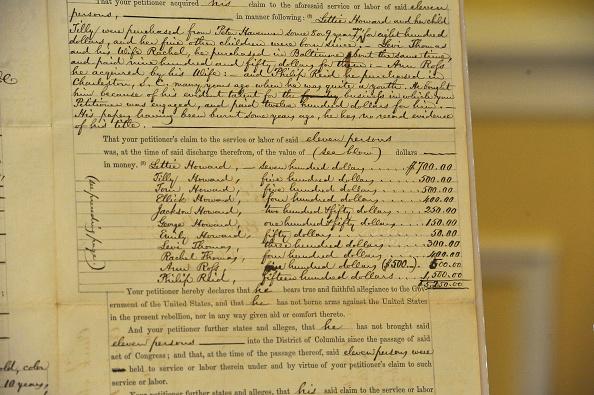
A petition that was used to free slaves in the District of Columbia. (The Washington Post/Getty Images)
An Unprecedented Deal
The Compensated Emancipation Act freed all enslaved people in the District, but with a critical and contentious component: it also allowed former owners to petition the government for up to $300 for each slave they freed, compensation for the “loss of property.” The act also included funds for freed people to resettle in Africa or South America, effectively encouraging them to leave the U.S. This idea was understandably not popular in the Black community.
Although controversial, this method produced rare documentation of the names, ages, histories, and descriptions of thousands of African-Americans in D.C. during that time. Archivists today continue to refer back to that paperwork to trace the ancestry of Black Washingtonians, and even identify unmarked graves in some of D.C.’s historic Black cemeteries.
Emancipation Day Today
Today, D.C. celebrates Emancipation Day with a massive parade downtown along with a fireworks display. This year, it was held on Sunday, April 13 and drew thousands. You can also view the original District of Columbia Emancipation Act at the National Archives, along with related records such as petitions from former slaveholders.