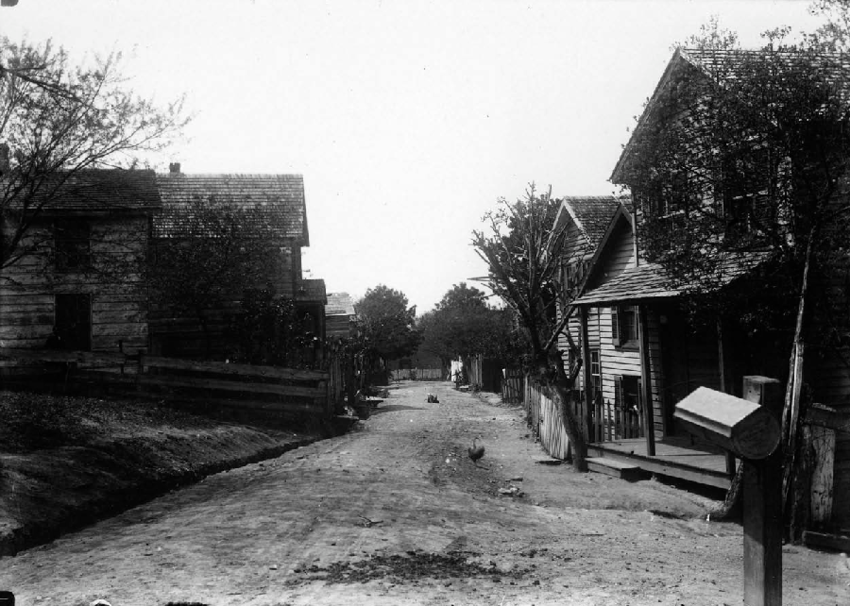
Queen City – a historically Black neighborhood in Arlington – was wiped off the map in 1942 to make way for the rushed construction of the Pentagon. It was located where a current-day cloverleaf joins Columbia Pike and Washington Boulevard.
At a community meeting last week, Arlington leaders expressed regret for how Queen City residents were treated and said the local leaders at the time failed them by not advocating for them.
The community’s first inhabitants were descendants of Freedmen’s Village – a settlement for freed slaves in the now Arlington Cemetery – who were forced to move out in the 1890s.
The community of over 900 people was self-sustaining, with its own businesses, churches, a fire department, school, and even a trolley stop. However, it lacked much of the city infrastructure common in white neighborhoods at the time, like sidewalks and running water.
The village thrived for over 40 years until the federal government decided to use “eminent domain” – allowing the government to seize private property for public use – to take the area for its new defense headquarters. Residents were given two weeks to vacate and the town was razed almost overnight. Owners received $2,052 in compensation; renters got nothing.
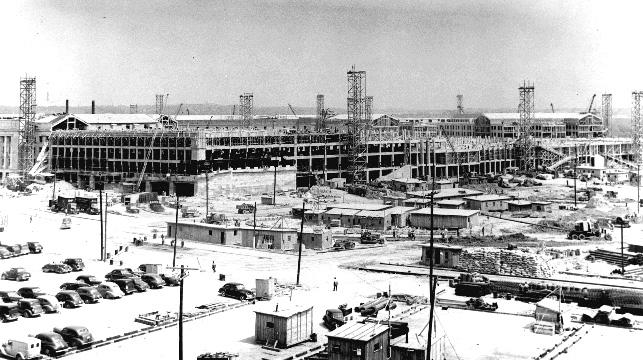
Northwest exposure of the Pentagon's construction underway. July 1, 1942. (Department of Defense/Wikimedia Commons)
The city put the residents in a trailer camp, where many stayed for years. William Vollin, one of the town's residents, told The Guardian, “We were left devastated, had no place to go. I went from one trailer camp to another trailer camp in filthy conditions.”
Recently, a new public art installation “Queen City” by artist Nekisha Durrett was erected to pay tribute to the vanished Black neighborhood. The structure is a 35-ft tall, well-like brick tower in Metropolitan Park with 903 ceramic teardrop vessels representing the 903 people who were displaced.