56 years ago, right before his assassination, Dr. Martin Luther King Jr. planned a campaign to combat income inequality in the U.S. Despite his death, King’s supporters went ahead with his vision to bring the realities of poverty to Congress’s doorstep. Thus, Resurrection City was born.
For over a month — May 15 to June 24, 1968 — they built a “city” of 3,000 temporary dwellings in the shadow of the Lincoln Memorial. The encampment became known as “Resurrection City,” housing anti-poverty activists and those experiencing homelessness from all over the country. The city was complete with a barber shop, a city hall, a mess tent, a daycare, and even its own ZIP code.
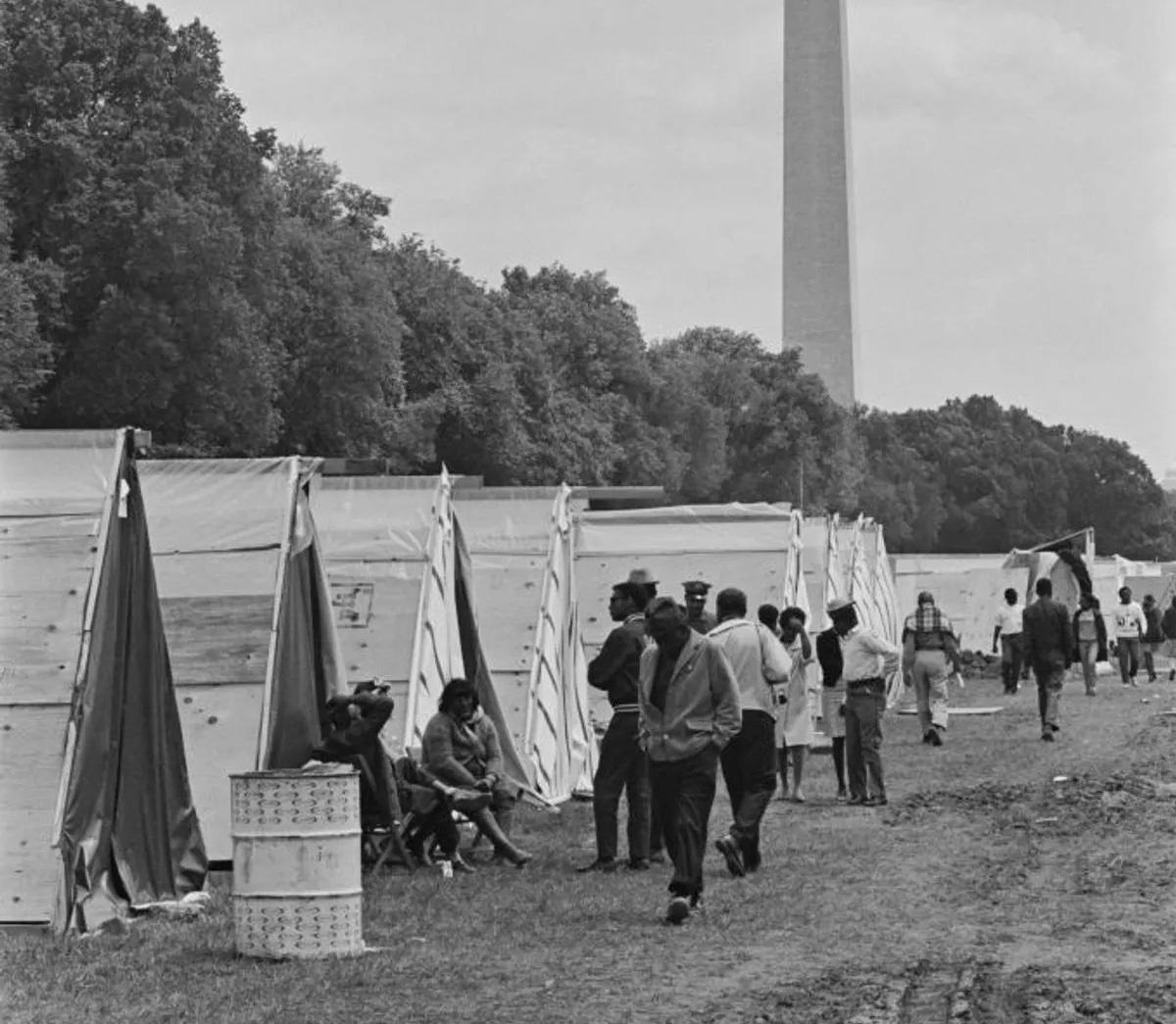
The wood-built temporary shelters at Resurrection City, at the close of the Poor People's March on the National Mall, May 1968. (Michael Ochs Archives/Getty Images)
While most of King’s previous campaigns were Black-centered, this one sought to form a coalition among Black, Native American, Latino, and white people to solve a national problem. The campaign demanded a living wage, unemployment income, access to land, and a say in how government assistance programs worked.
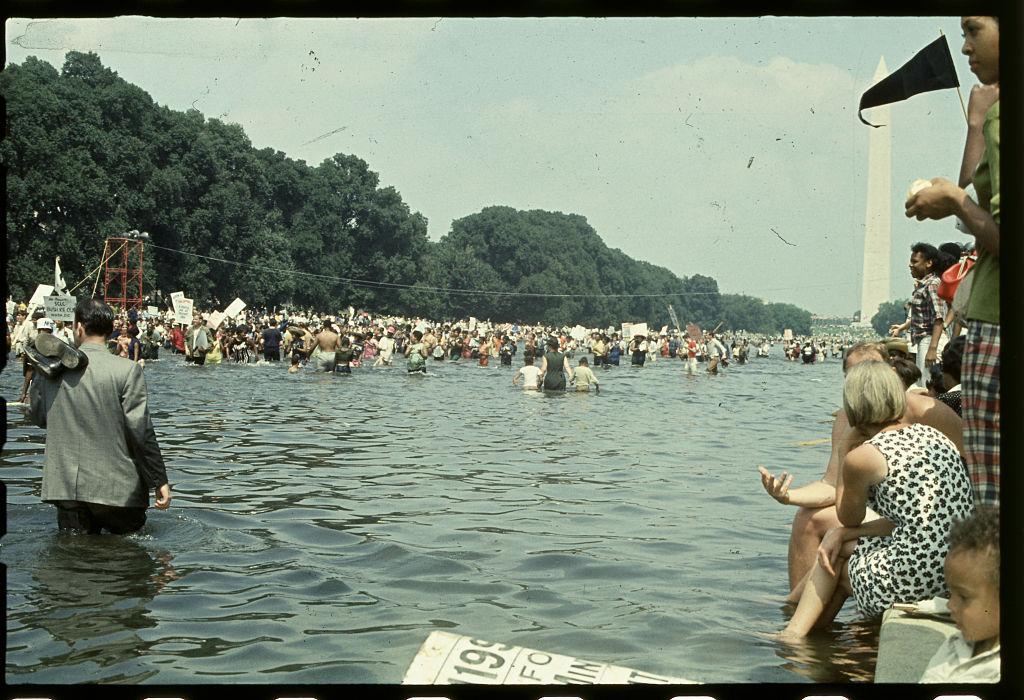
During the day, people in the city met with agencies or organized demonstrations around D.C. to address the needs of the poor. The largest event was the “Solidarity Day” rally at the Lincoln Memorial on June 19. More than 50,000 people gathered to demonstrate on the National Mall.
While Resurrection City doesn’t get as much coverage as other iconic protests in the ‘60s, its influence can be seen in political movements since, like Occupy Wall Street, Black Lives Matter, and the recent pro-Palestine encampments.