The Potomac River runs 405 miles long, flowing southeast past the District of Columbia into Chesapeake Bay and serves as the border between Virginia and Maryland. The Potomac is celebrated for its beauty and historical significance. George Washington built his Mount Vernon home along the banks below D.C.
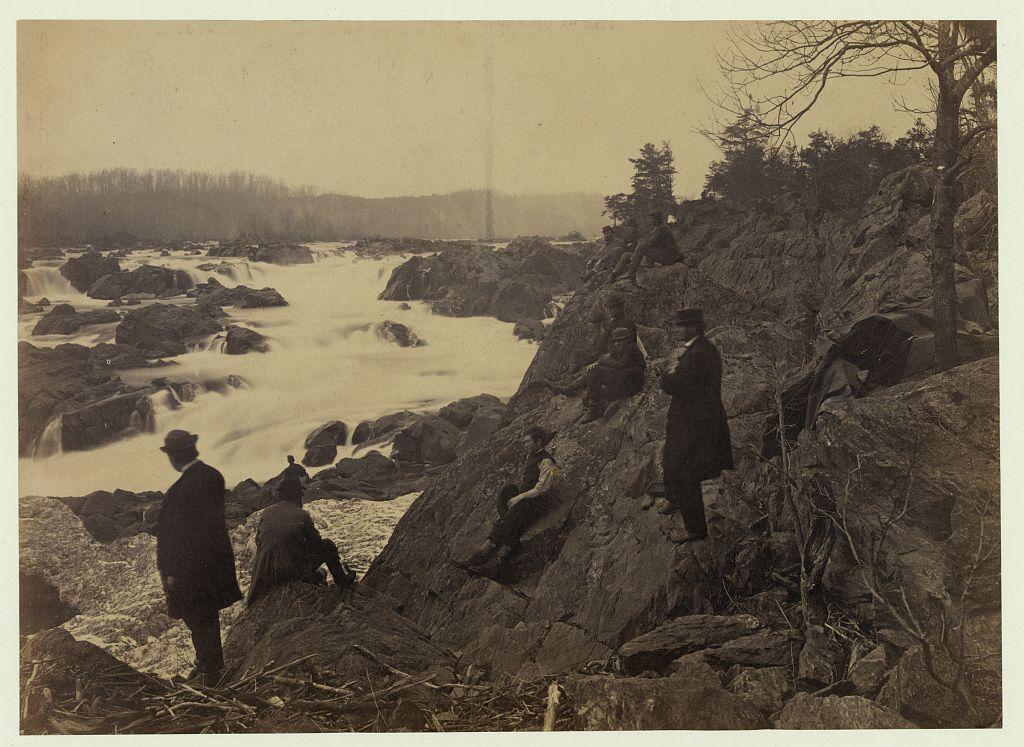
At Great Falls in Virginia, the Potomac River finds its speed through the jagged rocks, making it a popular site for tourists and locals alike. It was a historic trading spot between the Indigenous people and early colonists.
Washington wanted to design a navigation and trade system from the Potomac River to the Ohio River Valley. After the Revolutionary War, he gathered representatives from Virginia and Maryland at Mount Vernon to form a company to work on the Potomac’s navigation system. In 1785, the Potowmack Canal Company was established to serve as a “door” to the western frontier, to reduce navigation hazards, and to establish commerce and unity.
The Potowmack Canal (sometimes spelled as Patowmack) is now considered one of the best examples of an early American canal system. The canal features by-passing waterways, consisting of five “skirting” canals constructed in areas where large obstacles couldn’t be removed. The canal was constructed with a mixed workforce of indentured servants, free laborers, and primarily enslaved laborers. It became operational in 1802, delayed by constant financial challenges. The Potowmack Company filed for bankruptcy after 26 years in operation.
Congress authorized the preservation of 800 acres around the Potowmack Canal as a park in 1930, and authority was transferred to the National Park Service in 1966. You can visit Great Falls Park every day except for Dec. 25.