City Cast DC logo

Why ‘The Great Gatsby’ Writer was Buried in Maryland

Posted on April 23, 2025   |   Updated on September 30, 2025
Natalia Aldana

Natalia Aldana

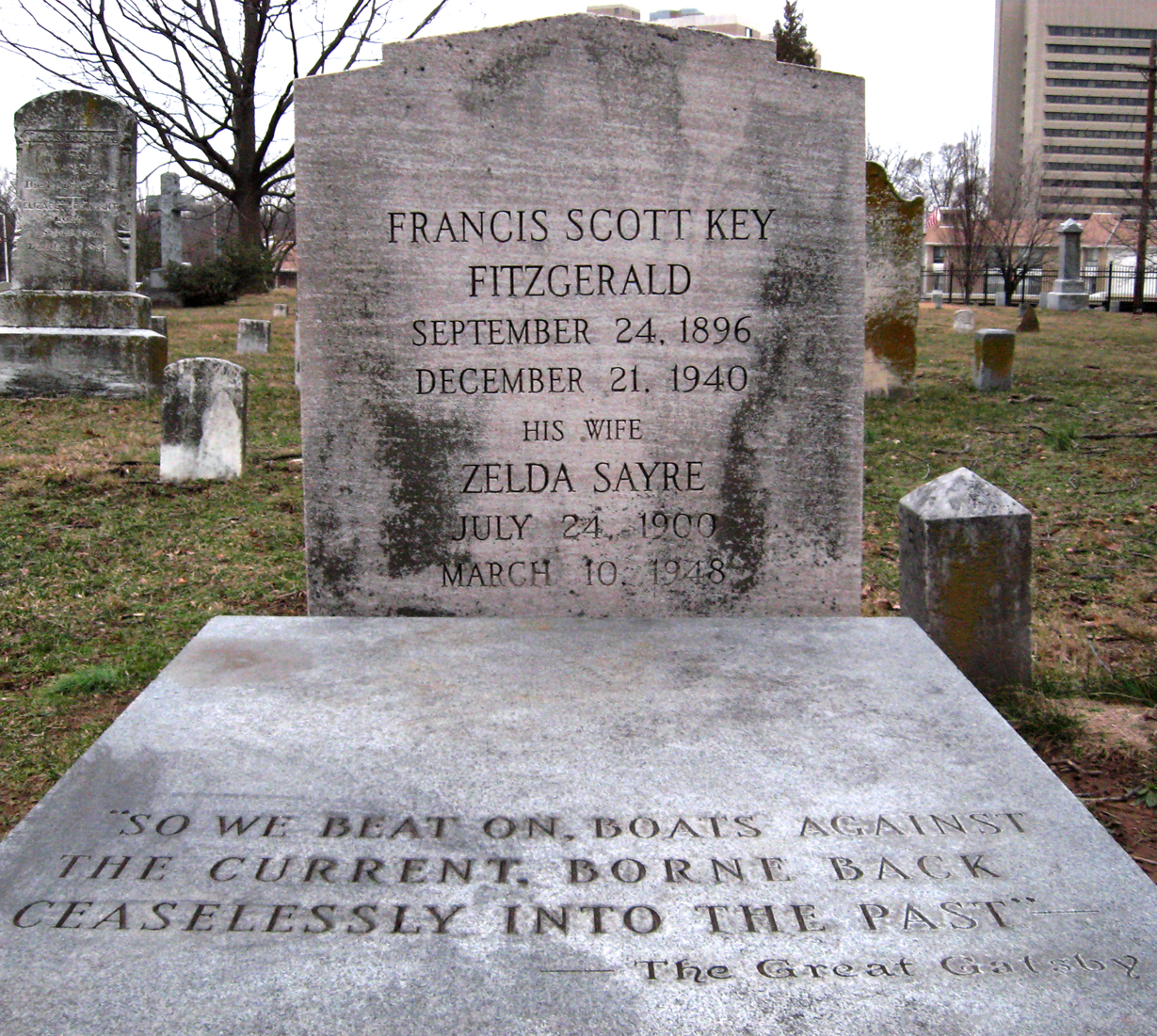
The grave of F. Scott Fitzgerald and Zelda Fitzgerald in St. Mary's Catholic Cemetery in Rockville. (JayHenry/Wikimedia Commons)

The grave of F. Scott Fitzgerald and Zelda Fitzgerald in St. Mary's Catholic Cemetery in Rockville. (JayHenry/Wikimedia Commons)

“The Great Gatsby” is considered one of the great American classic novels. Written in 1925, it captured the spirit of the Jazz Age, the insatiability of the Prohibition Era, and explored the disillusionment of the “American Dream.”

Though author F. Scott Fitzgerald may be more associated with Long Island, New York (the setting of his famous book), St. Paul, Minnesota (where he was born), or Los Angeles (where he passed), Fitzgerald’s final resting place is actually in Rockville.

The Lost Generation author’s family roots are in Maryland, and he was believed to have been very proud of his origins. He was born Francis Scott Key Fitzgerald in 1896, and his distant cousin was Francis Scott Key of “The Star-Spangled Banner” lore.
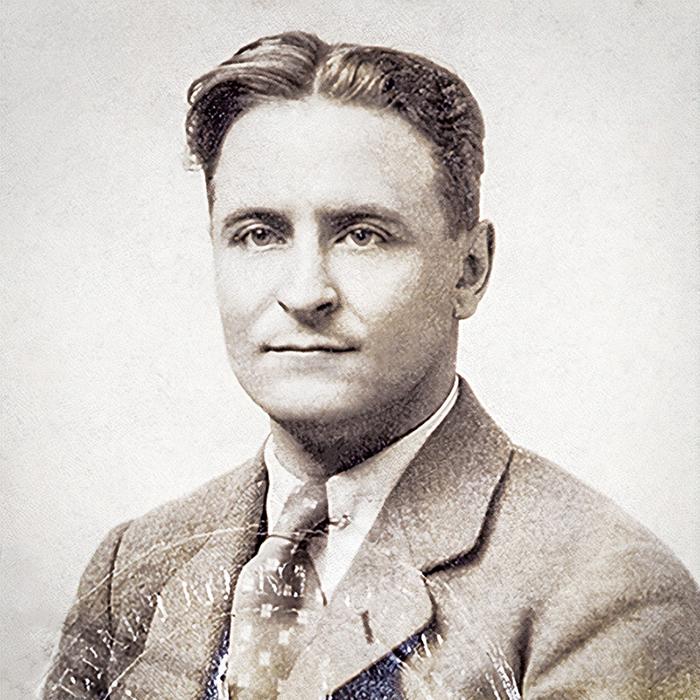
F. Scott Fitzgerald's passport photo in 1925 — the year “The Great Gatsby” was published. (United States Government Printing Office/Wikimedia Commons)

F. Scott Fitzgerald's passport photo in 1925 — the year “The Great Gatsby” was published. (United States Government Printing Office/Wikimedia Commons)

When Fitzgerald passed in 1940, his only known instructions requested “the cheapest funeral” possible. His wife, Zelda Fitzgerald, knew that he would have liked to have been buried at the family plot at the Catholic cemetery in Rockville.

But, having been considered an alternative thinker at the time with a hard-living reputation, the church refused, saying he was “unfit to be buried in consecrated ground.” So Zelda paid for him to be buried a mile down the road at Rockville Cemetery. She joined him eight years later.

The great novelist and wild party boy got his wish in the end. In 1975, members of the Rockville Women’s Club saw that the grave was deteriorating, and along with living family members, they petitioned the Archbishop of Washington, William Baum, to have Fitzgerald’s remains moved to St. Mary’s Church Cemetery. The archbishop gave his blessing, acknowledging Fitzgerald’s “poetic imagination” and that his characters were “seeking God and seeking grace.”

You can visit the historic cemetery in Rockville. Many have honored the adored author and his wife by leaving pens, pencils, and booze at their tombstone.

Share this story
see more:history

Share article

Hey DC

Stay connected to City Cast DC and get ready to join the local conversation.

Can't subscribe? Turn off your ad blocker and try again.

DC History

See All
DC HistoryMarch 30

The Rise & Fall of DC’s Iconic Wrestling Institution

At the height of the Great Depression in 1935, a small-time D.C. wrestler named Joe Turner opened what would become the city’s most succe...

 Joe Turner's arena
DC HistoryFebruary 17

Washington DC’s First Chinese Restaurants

D.C.’s Chinatown is a bit lackluster in terms of authentic cuisine, but that wasn’t always the case. Restaurants were some of the first C...

Port Arthur restaurant, Washington D.C. The largest Chinese restaurant in the city in 1909, owned by early restaurateurs Ung Wah. (Streets of Washington/Flickr)
DC HistoryJanuary 27

How This Storm Compares To DC’s Largest

Sunday’s snowstorm in D.C. was remarkable, not only because of how much snow we got but because the combo of cold temps and sleet means i...

Horse-driven sleigh on a snowy path near the Lincoln Memorial (Bettmann/ Getty Images)
DC HistoryNovember 18, 2025

6 Spy Sites In Washington, DC That Changed History

This nondescript park in Foggy Bottom, close to the State Department, has seen its fair share of spy activity.

Peirce Barn 1972. (HABS Survey/NPS)
DC HistoryOctober 23, 2025

DC’s Secret Séance History

In Gilded Age Washington, D.C., séances and Ouija boards weren’t just parlor tricks — they were part of a craze that swept through societ...

An illustration from the 19th century of a spiritual séance. (clu/Getty Images)
DC HistorySeptember 23, 2025

From The Archive: How DC Became a Showcase of Brutalism

Love them or hate them, Brutalism has become a central part of D.C.’s iconography over the years. Here's why.

DC Metro ceiling. (Ralph Grunewald/Getty Images)
DC HistoryAugust 26, 2025

The Glen Echo Carousel that Became a Civil Rights Movement

Tucked away in Glen Echo Park is one of the world's most elaborate and historic carousels that played a surprising roll in the Civil Righ...

The Glen Echo Dentzel carousel gets a last minute touch up before the season's inaugural ride. (The Washington Post/Getty Images)
DC HistoryAugust 11, 2025

The Wildest DC Political Scandals (That Didn’t Happen on Capitol Hill)

Case in point: the ongoing drama surrounding Ward 8 Councilmember Trayon White, who said on Friday (during his swearing-in ceremony after...

Portrait of Washington DC Mayor Marion Barry