City Cast DC logo

From the Archives: Building a Capital

Posted on July 23, 2024   |   Updated on September 30, 2025
Kaela Cote-Stemmermann

Kaela Cote-Stemmermann

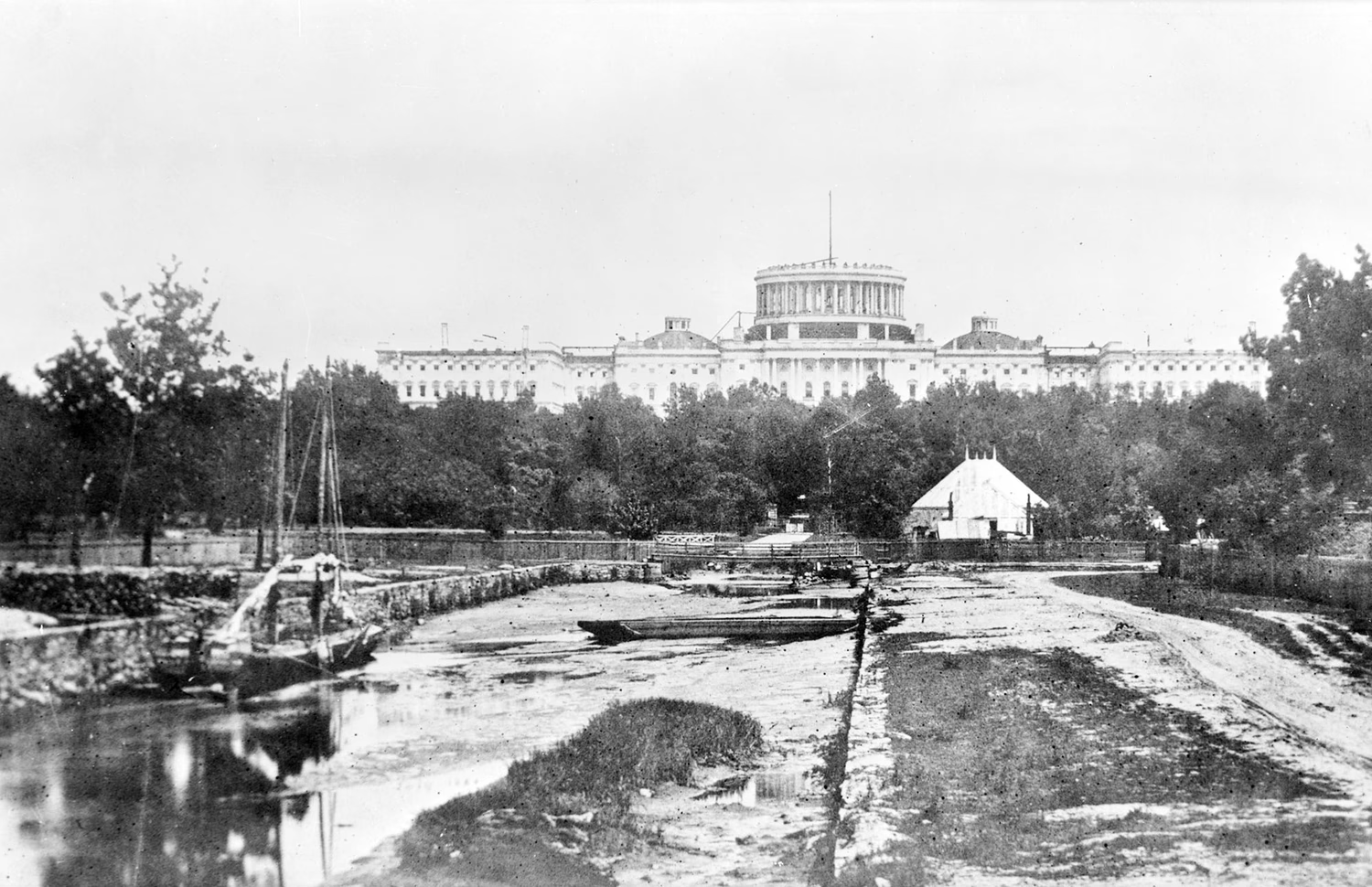
The west front of the Capitol, under construction in 1861. The foreground is part of the old Washington City Canal, which connected Tiber Creek with the Potomac River.  It’s now where the Supreme Court is. (Library of Congress)

The west front of the Capitol, under construction in 1861. The foreground is part of the old Washington City Canal, which connected Tiber Creek with the Potomac River.  It’s now where the Supreme Court is. (Library of Congress)

The Hill has been turned on its head this week and it has us thinking about simpler times, when our town was just being built.

In the summer of 1800, John Adams had the federal government pack up and move from Philadelphia to Washington, D.C. The move was part of The Residence Act, a plan to appease pro-slavery states who feared a northern capital would be too sympathetic to abolitionists. (But I mean, is D.C. the south?)
At the time, there were only about 125 federal employees (compared to almost two million today). However, D.C. wasn’t totally ready for governing yet. The Capitol was still under construction.

Construction on the Capitol began in 1793. It was a time-consuming process as sandstone had to be shipped in from Virginia. It was also hard to convince skilled workers to leave their homes to come to the relative wilderness of Capitol Hill to work on the project.

Enslaved laborers were therefore rented from their owners, and were involved in almost every stage of construction. They quarried the stone used for the floors and columns, sawed it, and became skilled in brick making and laying.
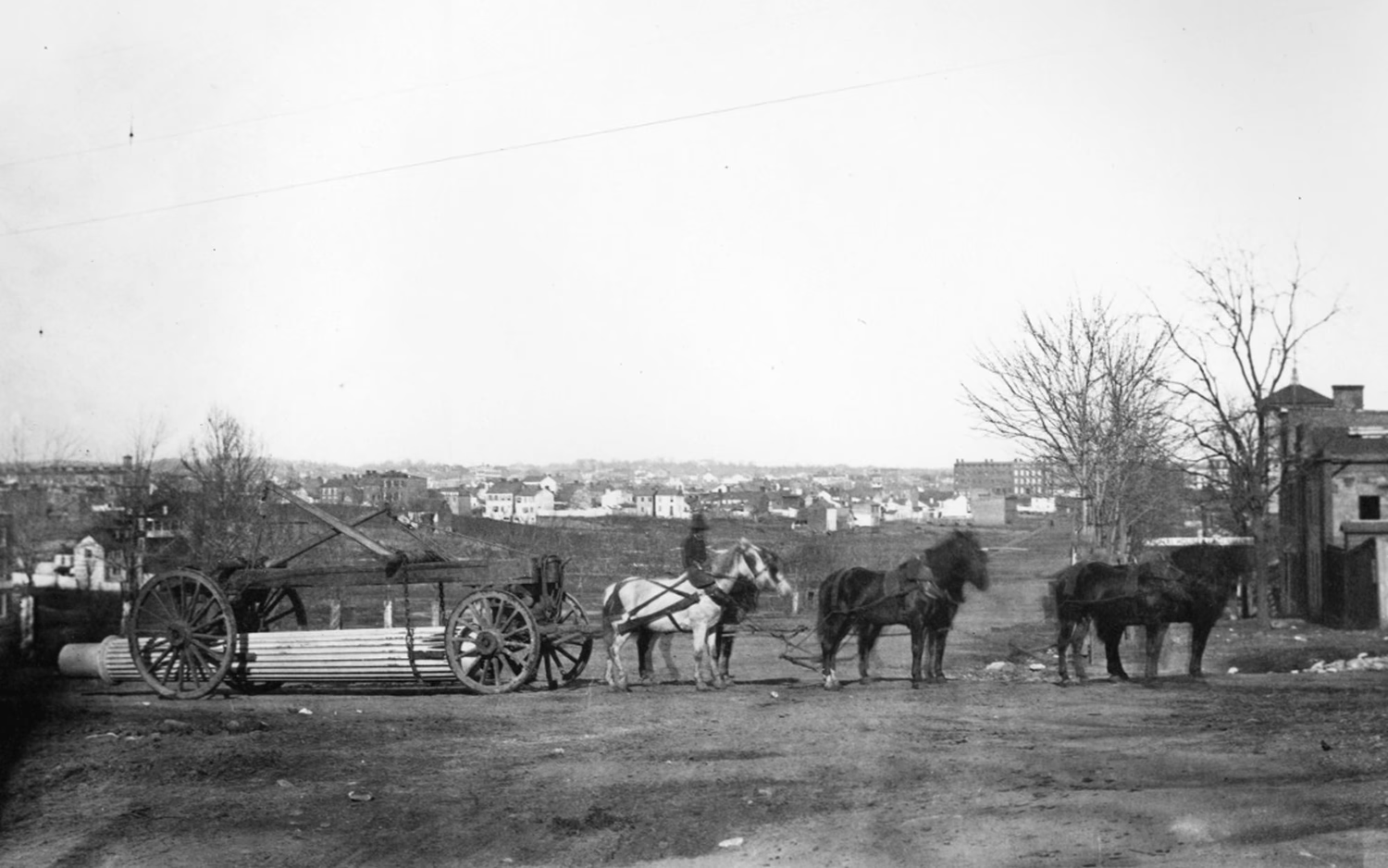
Hauling a fluted cast-iron column shaft for the Dome from the train station to the Capitol work yard in November 1856. (Library of Congress)

Hauling a fluted cast-iron column shaft for the Dome from the train station to the Capitol work yard in November 1856. (Library of Congress)

The most well-known enslaved worker was Philip Reid. He figured out how to separate the five-piece plaster model of the Statue of Freedom using a pulley and tackle system that had stumped everyone for weeks.

Construction wasn’t fully complete until 1830, and since then, the Capitol has had several phases of construction, including the dome, to make it look like it does today.

Share article

Hey DC

Stay connected to City Cast DC and get ready to join the local conversation.

Can't subscribe? Turn off your ad blocker and try again.

DC History

See All
DC HistoryMarch 30

The Rise & Fall of DC’s Iconic Wrestling Institution

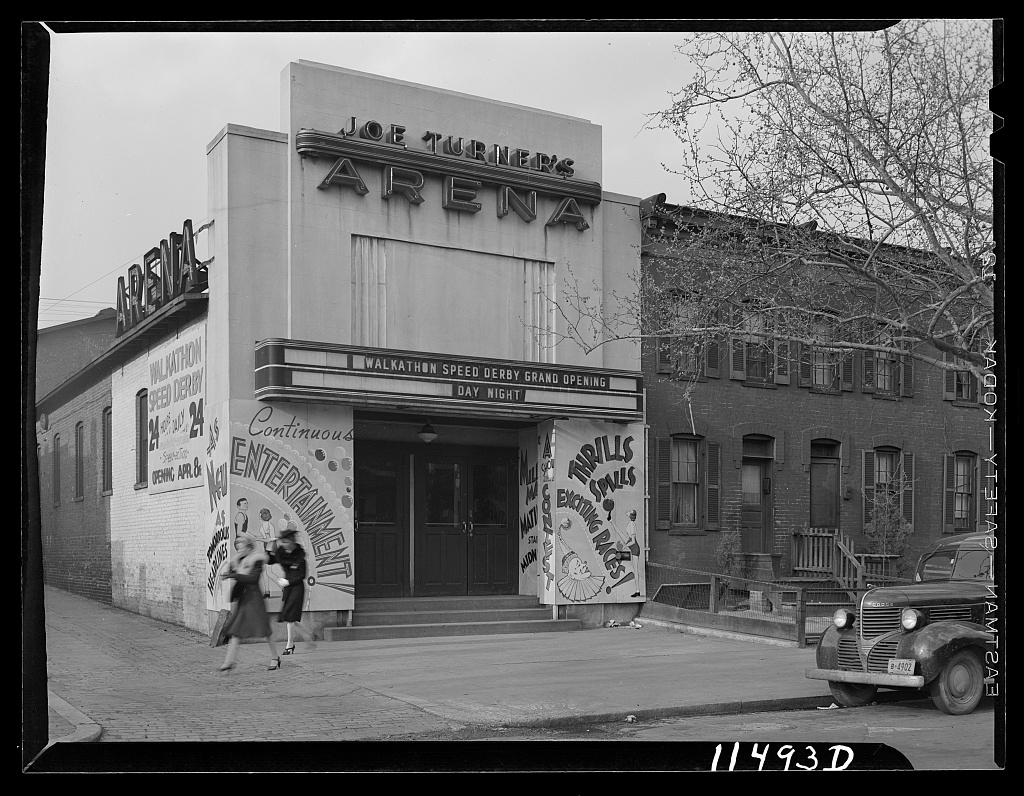
At the height of the Great Depression in 1935, a small-time D.C. wrestler named Joe Turner opened what would become the city’s most succe...

 Joe Turner's arena
DC HistoryFebruary 17

Washington DC’s First Chinese Restaurants

D.C.’s Chinatown is a bit lackluster in terms of authentic cuisine, but that wasn’t always the case. Restaurants were some of the first C...

Port Arthur restaurant, Washington D.C. The largest Chinese restaurant in the city in 1909, owned by early restaurateurs Ung Wah. (Streets of Washington/Flickr)
DC HistoryJanuary 27

How This Storm Compares To DC’s Largest

Sunday’s snowstorm in D.C. was remarkable, not only because of how much snow we got but because the combo of cold temps and sleet means i...

Horse-driven sleigh on a snowy path near the Lincoln Memorial (Bettmann/ Getty Images)
DC HistoryNovember 18, 2025

6 Spy Sites In Washington, DC That Changed History

This nondescript park in Foggy Bottom, close to the State Department, has seen its fair share of spy activity.

Peirce Barn 1972. (HABS Survey/NPS)
DC HistoryOctober 23, 2025

DC’s Secret Séance History

In Gilded Age Washington, D.C., séances and Ouija boards weren’t just parlor tricks — they were part of a craze that swept through societ...

An illustration from the 19th century of a spiritual séance. (clu/Getty Images)
DC HistorySeptember 23, 2025

From The Archive: How DC Became a Showcase of Brutalism

Love them or hate them, Brutalism has become a central part of D.C.’s iconography over the years. Here's why.

DC Metro ceiling. (Ralph Grunewald/Getty Images)
DC HistoryAugust 26, 2025

The Glen Echo Carousel that Became a Civil Rights Movement

Tucked away in Glen Echo Park is one of the world's most elaborate and historic carousels that played a surprising roll in the Civil Righ...

The Glen Echo Dentzel carousel gets a last minute touch up before the season's inaugural ride. (The Washington Post/Getty Images)
DC HistoryAugust 11, 2025

The Wildest DC Political Scandals (That Didn’t Happen on Capitol Hill)

Case in point: the ongoing drama surrounding Ward 8 Councilmember Trayon White, who said on Friday (during his swearing-in ceremony after...

Portrait of Washington DC Mayor Marion Barry