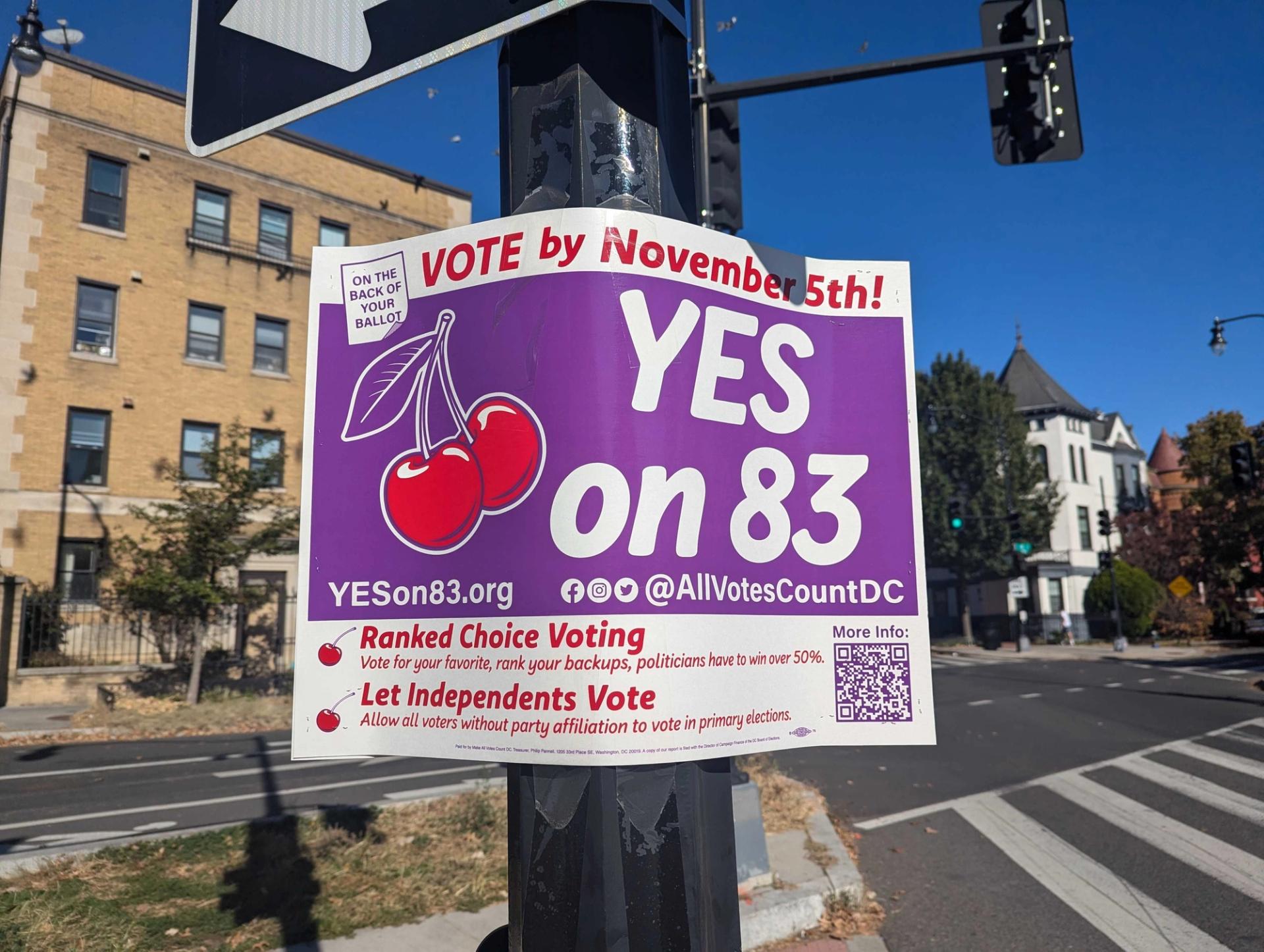
I-83 passed with 72% of the vote, meaning voters want D.C. to adopt ranked choice voting and semi-open primaries (allowing Independents to vote in the primary of their choice). But first, D.C. Council has to fund and implement the idea, something Chairman Phil Mendelson and several councilmembers are not thrilled about.
Passed, But Still Unfunded
D.C. law prohibits ballot initiatives that would cost the city money. So, to get on the ballot, I-83 had to include language saying that it’s “subject to appropriations.” That means that even though nearly three out of four voters selected yes, D.C. Council and Mayor Bowser could side-step the vote by saying there isn’t room in the budget for it.
How Much Money Are We Talking?
D.C.’s Chief Financial Officer projects it will cost about $1.5 million over four years. This would mainly go towards voter outreach, any changes to voting equipment, and possibly the need for more polling and educational staff.
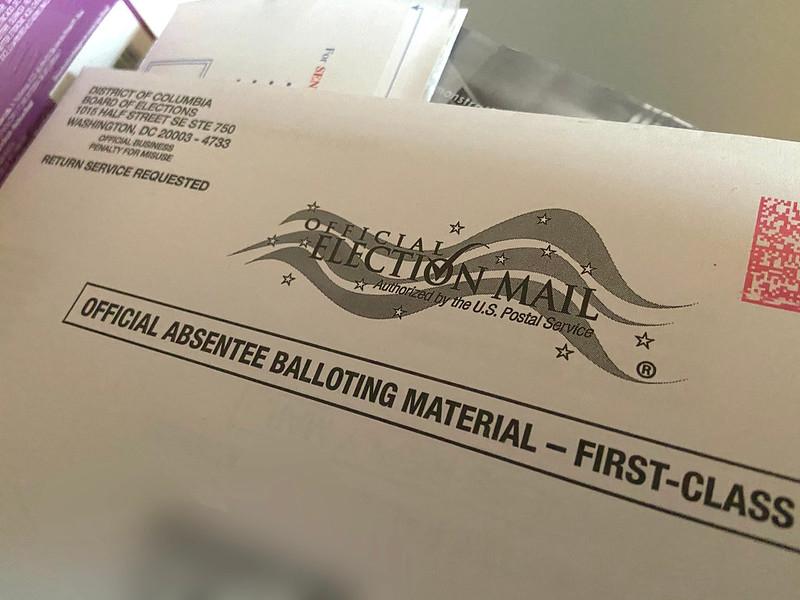
Washington D.C. absentee ballot. (Adam Fagen/Flickr)
Behind the Scenes
Chairman Phil Mendelson and many on D.C. Council were opposed to I-83. They even shot its provisions down once before in 2021, when they were introduced as a bill. Many establishment politicians say ranked choice voting is too confusing for voters, and that semi-open primaries dilute the parties’ identities. But I-83’s proponents say the initiative strengthens D.C.’s democracy. (We hosted a debate, if you want to learn more.)
Will It Get Funded?
Proponents of I-83 hope that because it passed so overwhelmingly — with three-quarters of the vote — D.C. Council will respect the wishes of voters and make it a priority. But, Mayor Bowser has hinted that D.C. is considering many competing priorities, and she can't guarantee that this will take precedent.