
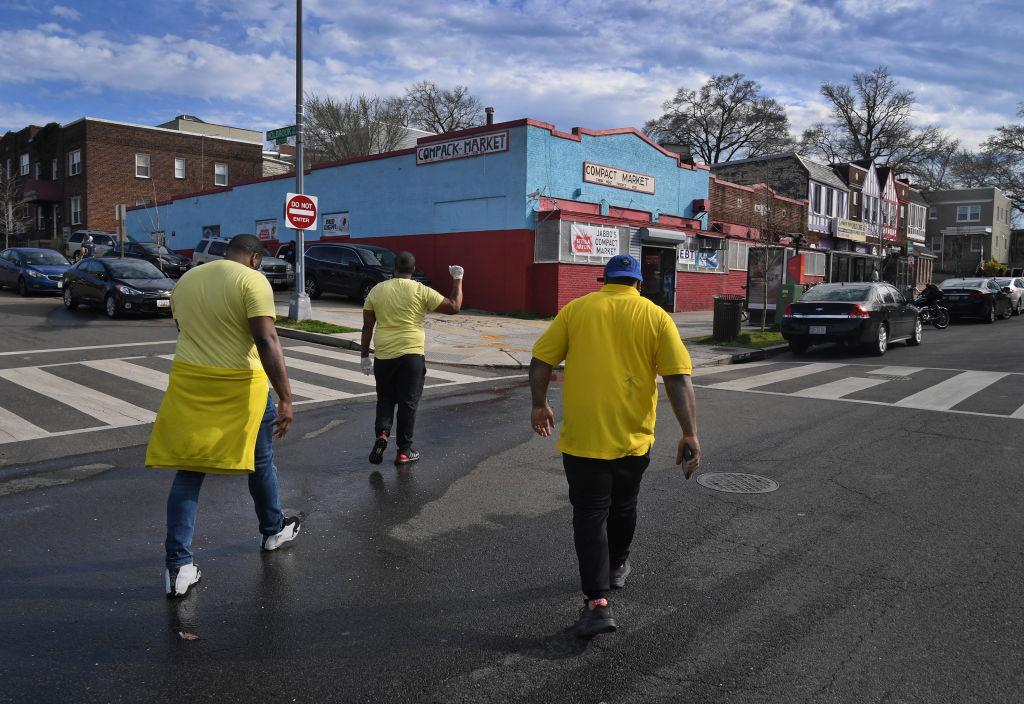
Violence intervention programs are just one of the strategies the D.C. government deploys in its fight against crime, placing the focus on prevention rather than enforcement. So, what exactly do violence interrupters do and how is their work evaluated?
What A Violence Interrupter Does
As part of these programs, violence interrupters provide an alternative to police departments in communities most at risk for violence. A trained interrupter works directly with residents to resolve person-to-person disputes before they lead to further altercation or shootings.
Interrupters can also intervene after an incident to help prevent retaliation and further conflict.
Why DC Needs Violence Interrupters
According to crime data from the Metropolitan Police Department, there were 274 homicides in D.C. in 2023 — a 36% increase from the previous year, and a 20-year high. While gun violence happens across the city, the impact is felt disproportionately in lower-income areas like Wards 7 and 8.
MPD typically gets involved after a crime has taken place, and enforcement tactics have faced mounting scrutiny. Violence intervention programs are designed to be a community-driven liaison to combat gun violence in neighborhoods that need it most, before conflict escalates.
Do Violence Interrupters Work?
It’s hard to know! The D.C. Police Union recently asked that D.C.’s violence interruption programs be shut down and examined. But our podcast guest Dr. Joseph Richardson credited Baltimore’s falling crime rate, in part at least, to its similar crime intervention program.
While law enforcement statistics like crime rates and police arrests are historically easier to quantify, crime prevention requires years of difficult work, community trust, and long-term data analysis. There is no single cause of crime, and no singular strategy to combat it.
It’s also worth noting that there are two separate crime intervention programs in D.C. Cure the Streets is under the Office of the Attorney General and uses the standard model for street outreach. Then, there’s the Violence Intervention Initiative, which is under the Office of Neighborhood Safety and Engagement and has discretion to use its own models. Two programs operating independently from each other adds to the difficulty of measuring success.
Given the complexity of these programs, the city is constantly reevaluating how they work and how to improve them. The City Cast DC podcast sat down with one man helping with that research.