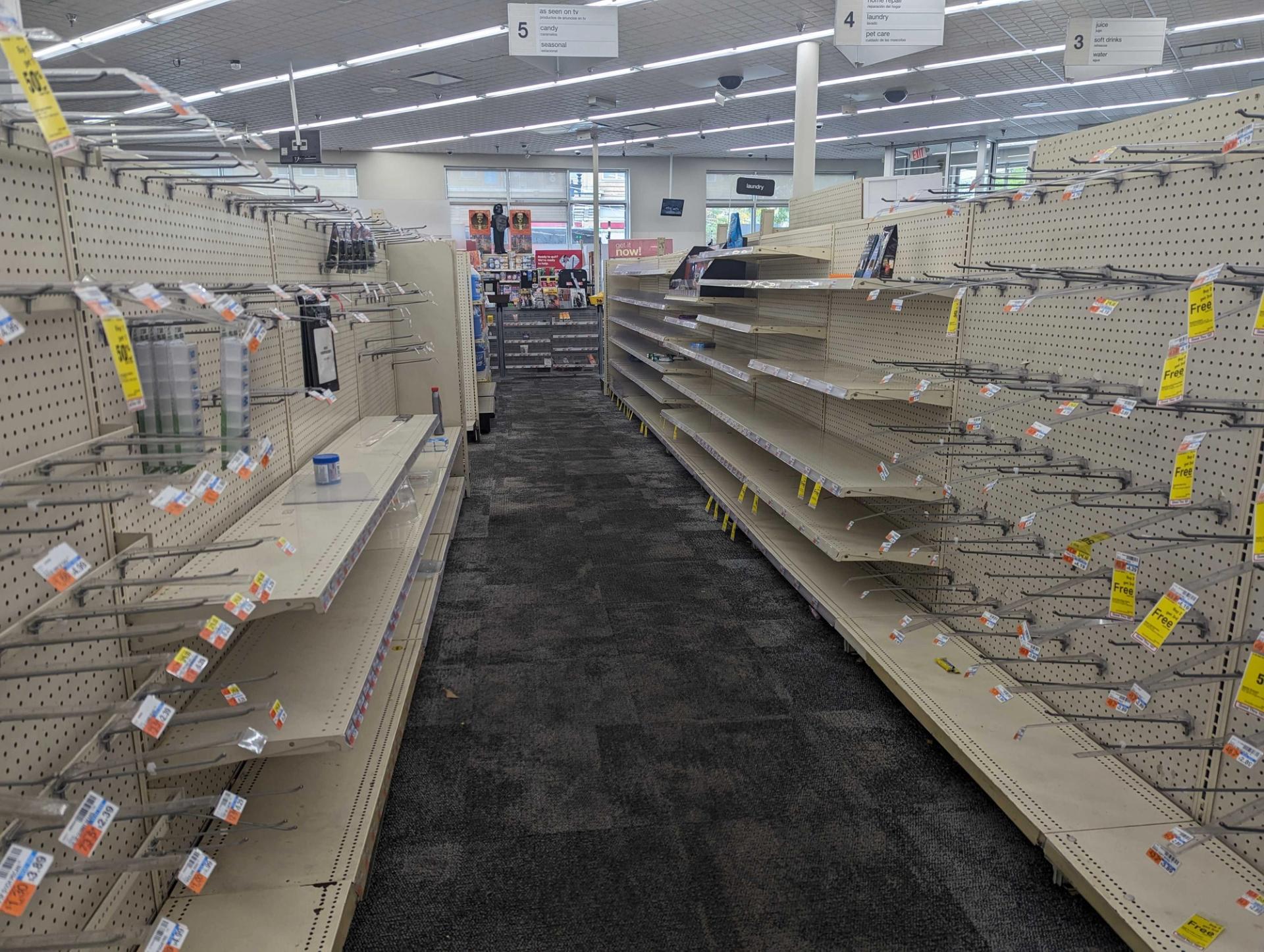
Pour one out; the Columbia Heights CVS is closing today. With its empty shelves and widely-reported organized retail theft incidents, the location turned into a local and national symbol of D.C.’s rising crime. But despite the media whirlwind, crime isn’t the sole reason for its closure.
So, Why IS the CVS Closing?
CVS spokespeople cite “local market dynamics, population shifts, and store density.” In fact, the retail giant announced plans to close locations across the city and country, to realign finances around a new drug initiative.
Additionally, pharmacy chains in general are facing challenges across the country, including competition with Amazon which recently started filling prescriptions, and a dwindling and overworked retail workforce. All of these factors play a part in a full conversation about the closing of the Columbia Heights CVS.
Why Is Everyone Only Talking About Crime Then?
Crime is a topic that intersects highly-charged issues like race, class, city demographics, and safety. Unfortunately, the emotion around these issues also allows inaccurate information to thrive.
Rather than simply inform, urban crime stories are regularly used to bolster a portrait of inept Black or Democratic leadership, to paint our cities as out-of-control hellscapes run into the ground. Social media incentivizes crime reporting that isn’t always comprehensive, or honest.
Is There a Solution?
Crime in D.C. is a serious issue, and there is no question that this CVS was entrenched in grim news stories about smash-and-grabs and empty shelves. However, the one-dimensional reporting on this closure perpetuates an incomplete narrative, and that’s especially harmful on an issue as sensitive and important as public safety. We as the media need to do better to report the full picture.
That’s what I tried to do in a recent episode of City Cast DC.