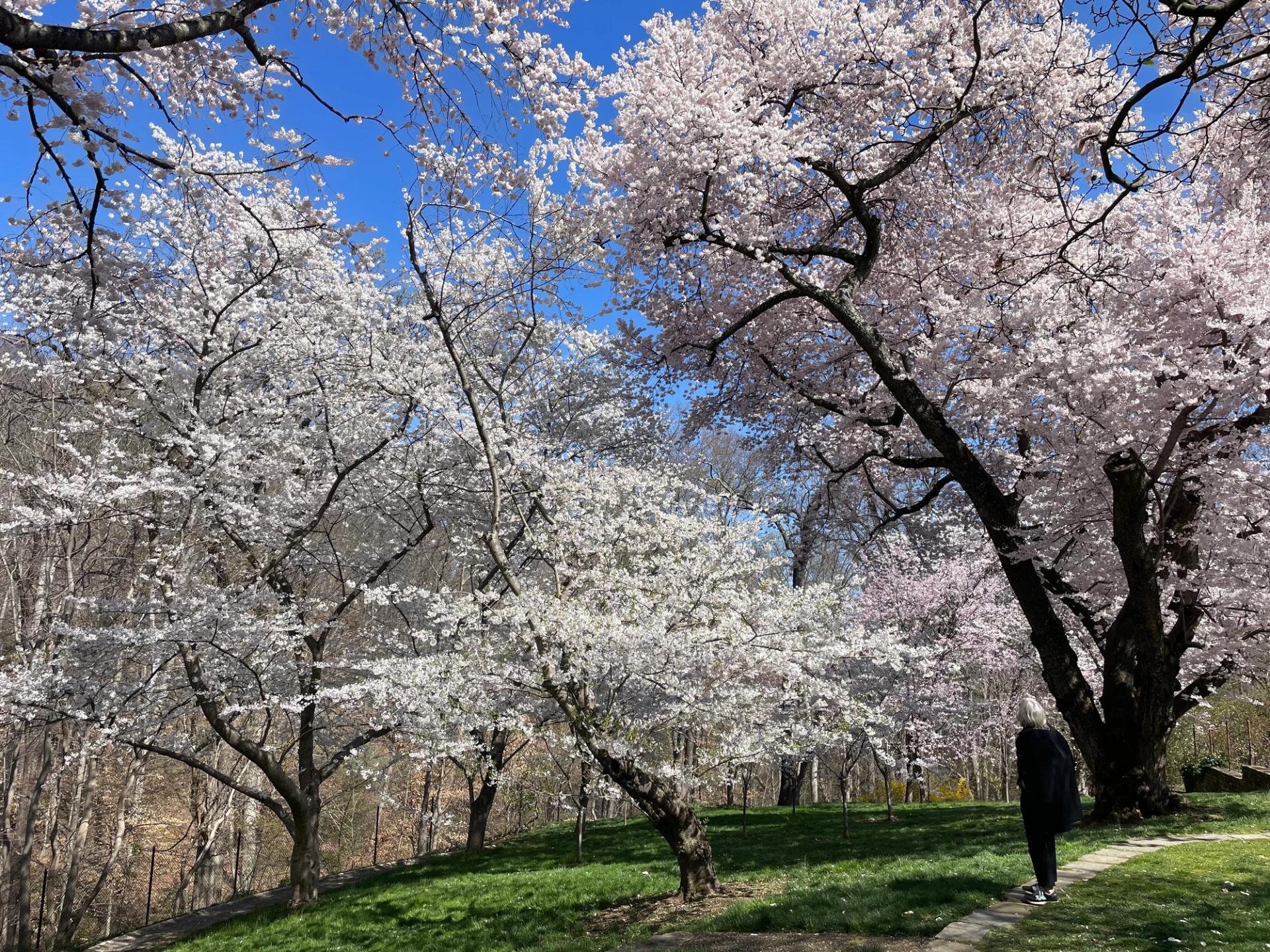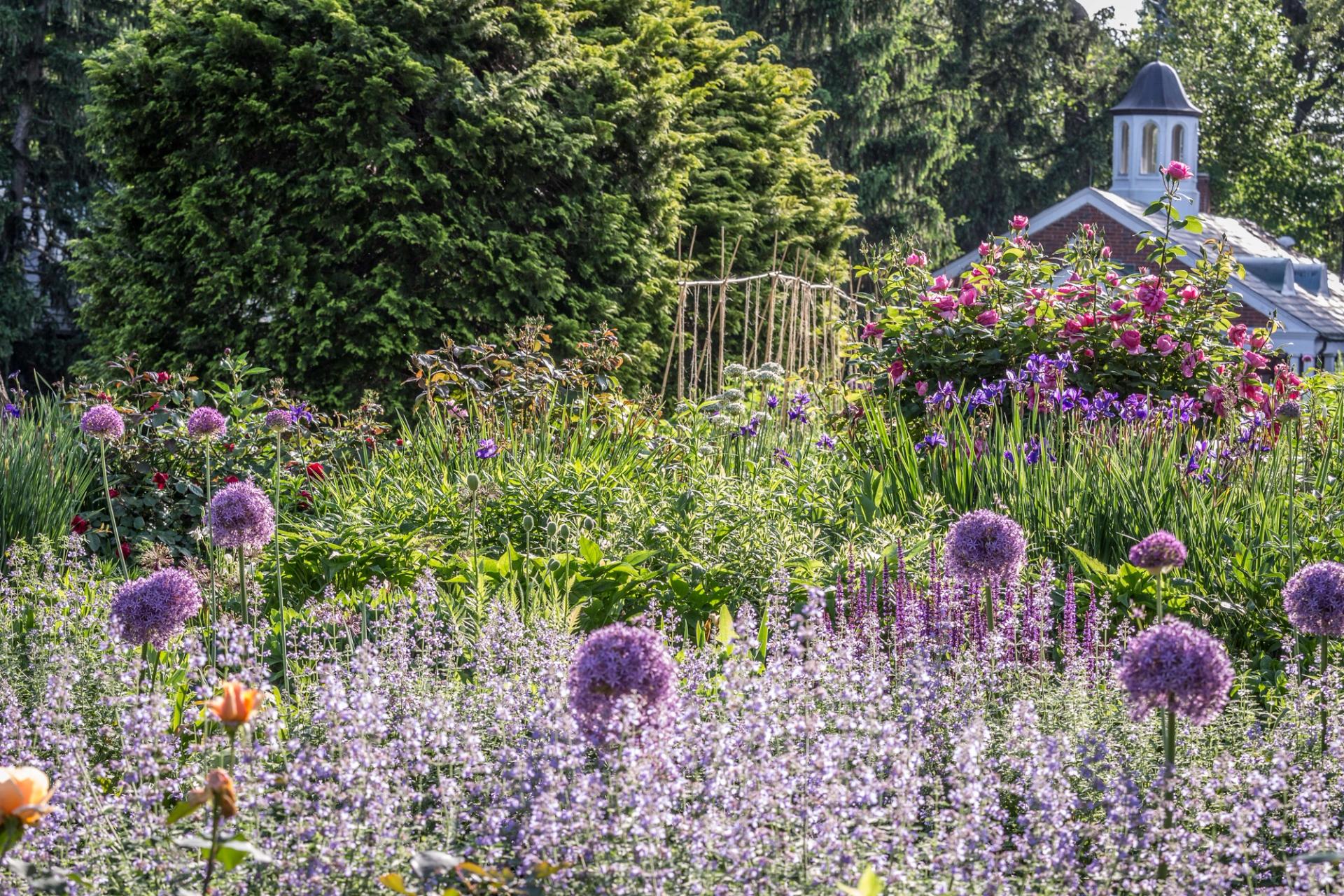
D.C.’s cherry blossoms will reach peak bloom between March 28 and 31, but don’t let their pretty petals distract you from everything else that’s in season. Spring in D.C. has a number of flowering trees and bushes that get overlooked thanks to the spotlight-stealing cherries. Here are some other blooms to look out for, which are just as beautiful, but command smaller crowds.
Orchids: Hillwood Estate, Museum & Gardens
Entry: $18 suggested donation
Marjorie Merriweather Post – cereal heiress, original Mar-a-Lago owner, and mid-century D.C.-hostess extraordinaire – is known today for her palatial Forest Hills home and its vast grounds, which are now public. A visit to Hillwood is ideal when the weather is warm, but even if there’s frost, you can find blooms in Post’s greenhouse. Hillwood is home to all varieties of orchids which flower regardless of season.
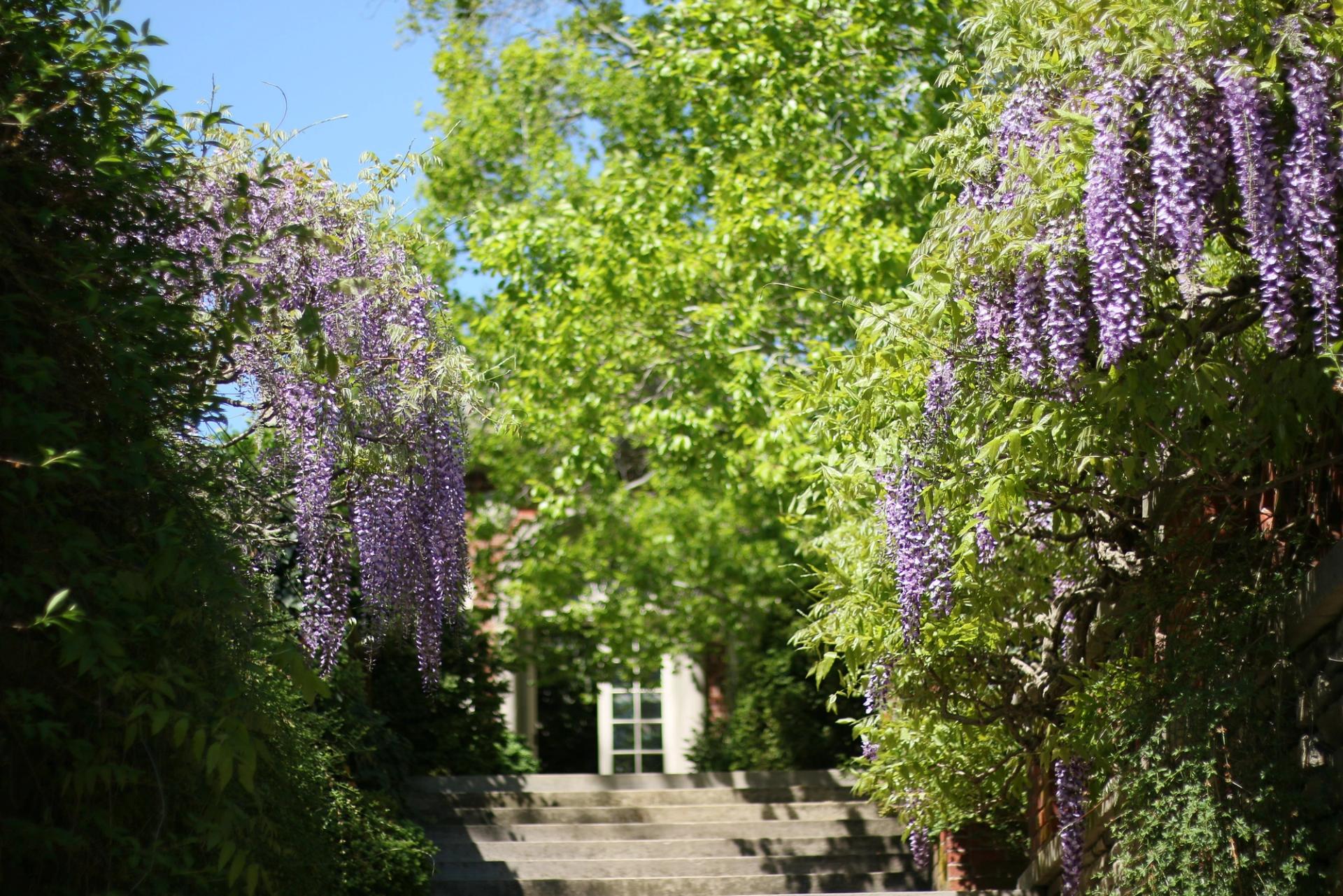
This wisteria overhangs the sides of the Urn Terrace at Dumbarton Oaks. (Photo by Spencer Lenfield / Dumbarton Oaks)
Forsythia: Dumbarton Oaks
Entry: $15 for timed-entry tickets
Technically part of Harvard University, the 50-acre gardens at Dumbarton Oaks feel like an essential part of a D.C. spring. Created by renowned landscape designer Beatrix Farrand, Dumbarton Oaks’ grounds are home to incredible flowering plum trees and voluminous forsythia bushes. Bring a book or a friend and plan to spend the whole afternoon here.
Magnolias: United States National Arboretum
Entry: Free
The Arboretum’s 446 acres are full of flowering trees besides the ubiquitous cherries. Come for the magnolias (mid-March to June), dogwoods (mid April to early June), and the crab apple trees (early April to May) – one of the best scents on earth. The Arboretum’s free app makes navigating the grounds a breeze.
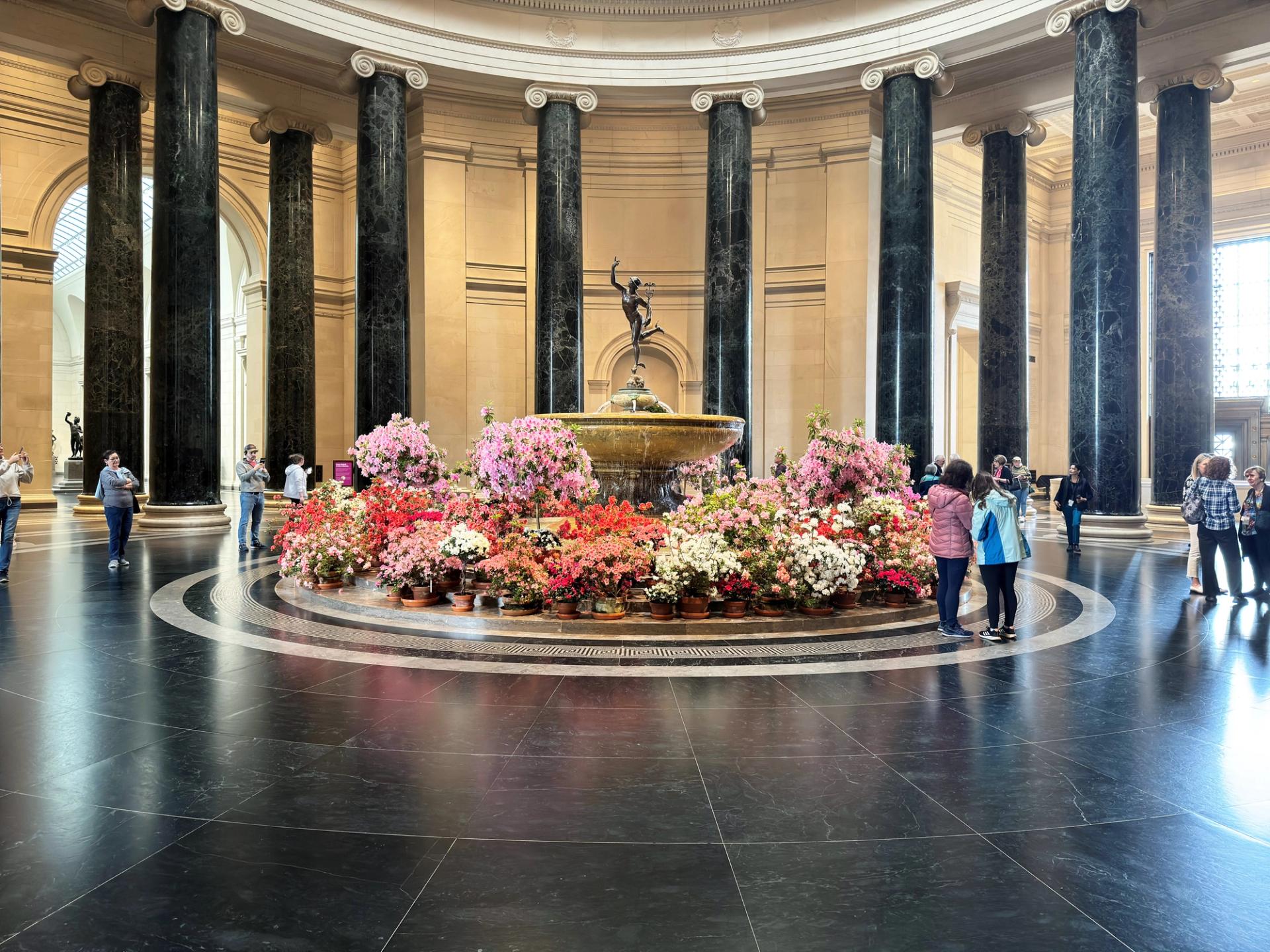
Blooms in the National Gallery of Art rotunda. (Courtesy of NGA Press Office)
Azaleas: National Gallery of Art
Entry: Free
The National Gallery of Art has several greenhouses within its 25-acre campus in the heart of D.C. Tucked between the museum and sidewalk-facing walls, these greenhouses keep the museum’s vast collection of plants – grown for everything from events to textile dyes – alive each winter. The gallery has a large collection of 100-year-old azalea plants. Each March, the plants are displayed in the gallery’s rotunda for an early dose of spring blooms.